
NDIS Positive Behaviour Support Insights | Gibelli Positive Pathways
Providing mobile PBS and Functional Behaviour Assessments to families across Victoria, New South Wales, South Australia, and Western Australia. While we support participants across multiple states, we are currently offering priority mobile capacity in Melbourne’s Western suburbs, including Melton, Werribee, and the Wyndham corridor.

Discover how practitioner-led Positive Behaviour Support (PBS) helps NDIS participants across Melbourne Metro, Geelong, and Ballarat manage sensory regulation, environmental triggers, and behaviours of concern through neuro-affirming, rights-based care.
Navigating Sensory Regulation & Environmental Triggers Across Melbourne Metro, Geelong & Ballarat: Person-Centered NDIS Behaviour Support
For neurodivergent individuals and NDIS participants navigating complex community settings, educational institutions, or daily home life, managing sensory overload and unexpected environmental triggers is vital to overall well-being. When sensory distress or overwhelming environments are unaddressed, frustration can manifest as behaviours of concern.
At Gibelli Positive Pathways, our Specialist Positive Behaviour Support (PBS) is designed to build capability, foster self-regulation, and enhance quality of life rather than control behavior. By taking a practitioner-led, mobile approach directly into homes, schools, workplaces, and community spaces across Greater Melbourne, Geelong, and Ballarat, we help participants establish practical coping mechanisms and supportive environments where they matter most.
Why Sensory and Environmental Proactive Support Drives Positive Outcomes
A core pillar of a comprehensive Functional Behaviour Assessment (FBA) is evaluating the environmental context and sensory factors driving a behavior. Often, challenging situations arise because an individual is overwhelmed by noise, light, transitions, or unpredictable routines without an accessible path to regulate.
By working directly in real-world environments across Victoria, our practitioners evaluate unique situational triggers and introduce proactive sensory and environmental supports:
In the Home: Designing predictable routines, low-arousal quiet spaces, and sensory-friendly zones that reduce daily anxiety and distress for the participant and family.
At School, TAFE, or Work: Partnering with educators, employers, and supervisors to adapt the physical environment, introduce scheduled sensory breaks, and implement accommodations tailored to the individual's sensory profile.
In Community & Social Settings: Building practical strategies and confidence in local settings across Melbourne, Geelong, and Ballarat so participants can engage in social activities safely and comfortably.
Key Takeaway: When participants are supported with sensory-aware environments and self-regulation tools, reliance on behaviours of concern naturally decreases, fostering long-term independence, comfort, and dignity.
Rights-Based Care That Respects Neurodivergence
Our clinical approach remains firmly rooted in neuro-affirming and human-rights-focused principles. We do not focus on compliance, suppressing harmless stimming, or forcing rigid social expectations. Instead, our clinical focus includes:
Uncovering Root Causes: Addressing underlying sensory overload, fatigue, physical discomfort, or unaddressed environmental stress.
Replacing Restrictive Practices: Substituting restrictive measures with proactive environmental adjustments, skill development, and functional communication tools.
Empowering Choice: Putting participant preferences, goals, and self-determination at the heart of every Behaviour Support Plan (BSP).
Active Capacity Across Greater Melbourne, Geelong & Ballarat
We maintain active practitioner capacity across key Victorian corridors, allowing for responsive intake and minimal wait times for Support Coordinators and Plan Managers:
Greater Melbourne Metropolitan Area: Western, Northern, Eastern, and Southern corridors (including Wyndham/Werribee, Melton, Hume, Whittlesea, Casey, and inner-metro hubs).
Geelong & Bellarine Peninsula: Geelong CBD, Northern Geelong, Grovedale, Ocean Grove, and surrounding growth corridors.
Ballarat & Central Highlands: Ballarat Central, Wendouree, Sebastopol, and surrounding regional communities.
Services Available Across VIC:
Positive Behaviour Support: Interim & Comprehensive BSPs, FBAs, and Restrictive Practice Panel submissions.
Stakeholder & Carer Training: Coaching support workers and families to implement strategy plans safely and effectively.
Make a Referral in Under 2 Minutes
If you are a Support Coordinator looking for a responsive clinical partner or a family member seeking compassionate, rights-based support, getting started is simple. Our clinical intake team reviews all requests promptly to ensure a smooth transition into care.
👉 Click here to complete our secure NDIS Referral Form
Have questions before referring? Contact our intake team at info@gibellipositivepathways.com.au or call us on 1300 090 468.
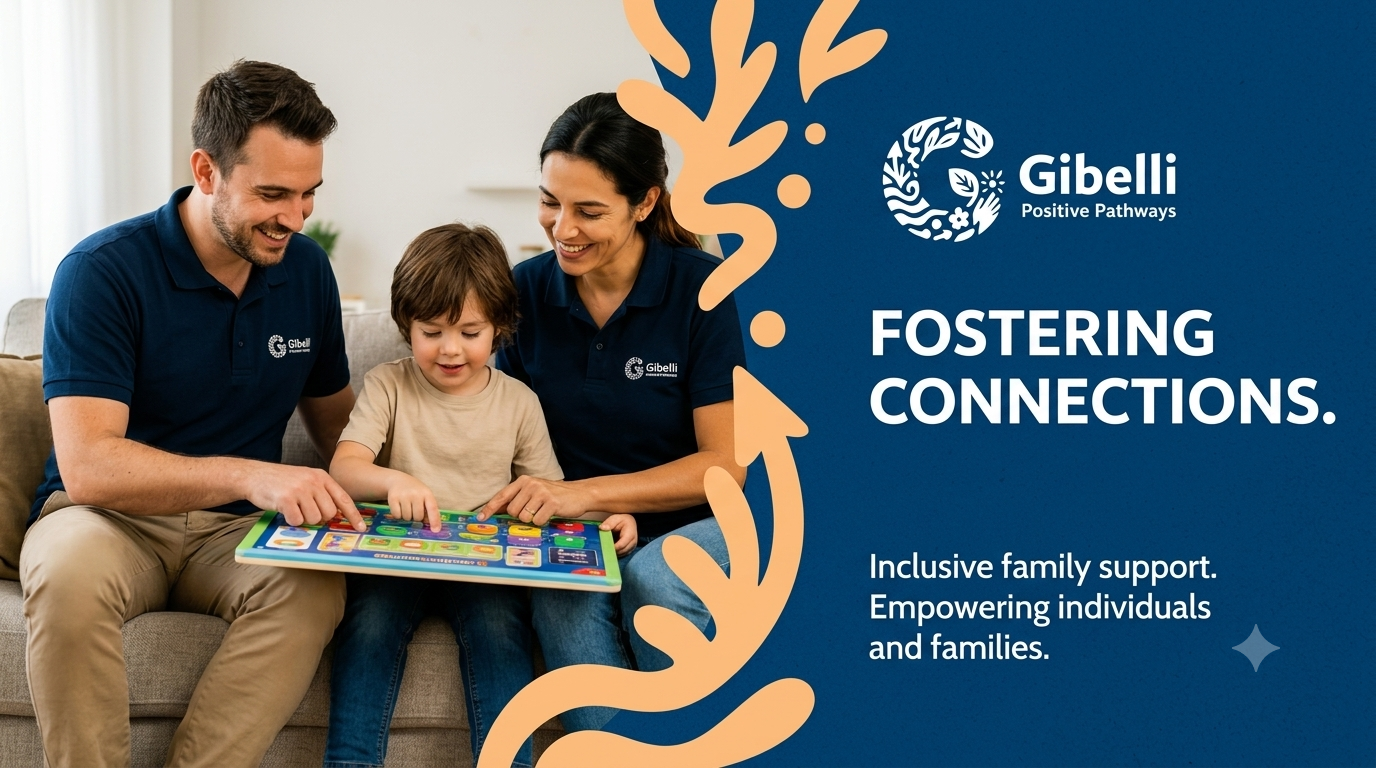
Delivering mobile, practitioner-led Positive Behaviour Support directly in homes, schools, and local communities across Greater Melbourne and Ballarat.
Mobile NDIS Behaviour Support Across Werribee, Greater Melbourne & Ballarat: Why Real-Environment Support Matters
Finding the right clinical support under the NDIS shouldn't depend on how far a participant can travel, nor should it force them into uncomfortable or unfamiliar environments.
For neurodivergent individuals and participants navigating complex behaviours of concern, traditional clinic-based therapy can sometimes introduce unnecessary stress. Busy waiting rooms, unfamiliar clinic lights, and strict artificial setups rarely reflect the realities of daily life.
At Gibelli Positive Pathways, we believe clinical care should adapt to the person—not the other way around. That’s why our Positive Behaviour Support (PBS) services are fully mobile, delivering practitioner-led, rights-based support directly to homes, schools, and community settings across Greater Melbourne and regional Victoria.
The Value of Mobile Support in Real-World Settings
When a Behaviour Support Practitioner conducts a Functional Behaviour Assessment (FBA) or implements a Behaviour Support Plan (BSP), context is everything. Behaviours of concern rarely occur in isolation; they are deeply connected to environmental triggers, sensory overload, communication barriers, and daily routines.
By meeting participants directly in their home, school, workplace, or local community, our practitioners can observe and support in real time:
In the Home: Understanding family dynamics, sensory inputs, and home routines allows us to co-design strategies that actually fit the household.
At School or Day Programs: Collaborating directly with educators and support staff ensures that environmental adjustments and proactive strategies are applied consistently throughout the day.
In the Community: Supporting participants in public spaces builds practical autonomy, confidence, and social participation without artificial boundaries.
Key Takeaway: Real-environment observation leads to more accurate assessments, more practical strategies, and significantly better long-term outcomes for participants and their support networks.
Neuro-Affirming & Rights-Based: Care That Respects the Individual
A mobile approach works hand-in-hand with our neuro-affirming and human-rights-focused clinical philosophy. We do not aim to eliminate natural expressions of neurodivergence or force masking. Instead, our focus is on:
Identifying Root Causes: Uncovering unmet needs, sensory triggers, or communication frustration behind challenging behaviours.
Reducing Restrictive Practices: Working dedicatedly to replace restrictive measures with proactive, environmental adjustments and skill-building.
Fostering Autonomy: Ensuring the participant's voice and choices remain at the center of their support plan.
Active Capacity Across Greater Melbourne & Regional Victoria
We maintain active practitioner capacity across key Victorian corridors, providing responsive intake with minimal waiting times:
Greater Melbourne Metropolitan Area: Western, Northern, Eastern, and Southern suburbs (including Werribee, Wyndham, Tarneit, Melton, and surrounding metro hubs).
Regional Hubs: Ballarat and surrounding regional communities.
We actively collaborate with Support Coordinators, Plan Managers, local allied health professionals, and families to streamline referrals and ensure fast allocations.
Services Available Across VIC:
Positive Behaviour Support (Interim & Comprehensive BSPs, FBAs, and Restrictive Practice Panel submissions)
Stakeholder & Carer Training (Coaching support workers and families to implement strategies effectively)
Make a Referral in Under 2 Minutes
If you are a Support Coordinator seeking a reliable clinical partner or a family member looking for compassionate, community-based support, getting started is straightforward. Our clinical intake team reviews all requests promptly to ensure a smooth transition into care.
👉 Click here to complete our secure NDIS Referral Form
Have questions before referring? Contact our intake team at info@gibellipositivepathways.com.au or call us on 1300 090 468.

Delivering mobile, practitioner-led Positive Behaviour Support directly in homes, schools, and local communities across Greater Melbourne and Ballarat.
Mobile NDIS Behaviour Support Across Werribee, Western Melbourne & Victoria: Why Real-Environment Support Matters
Finding the right clinical support under the NDIS shouldn't depend on how far a participant can travel, nor should it force them into uncomfortable or unfamiliar environments.
For neurodivergent individuals and participants navigating complex behaviours of concern, traditional clinic-based therapy can sometimes introduce unnecessary stress. Busy waiting rooms, unfamiliar clinic lights, and strict artificial setups rarely reflect the realities of daily life.
At Gibelli Positive Pathways, we believe clinical care should adapt to the person—not the other way around. That’s why our Positive Behaviour Support (PBS) services are fully mobile, delivering practitioner-led, rights-based support directly to homes, schools, and community settings across Greater Melbourne and regional Victoria.
The Value of Mobile Support in Real-World Settings
When a Behaviour Support Practitioner conducts a Functional Behaviour Assessment (FBA) or implements a Behaviour Support Plan (BSP), context is everything. Behaviours of concern rarely occur in isolation; they are deeply connected to environmental triggers, sensory overload, communication barriers, and daily routines.
By meeting participants directly in their home, school, workplace, or local community, our practitioners can observe and support in real time:
In the Home: Understanding family dynamics, sensory inputs, and home routines allows us to co-design strategies that actually fit the household.
At School or Day Programs: Collaborating directly with educators and support staff ensures that environmental adjustments and proactive strategies are applied consistently throughout the day.
In the Community: Supporting participants in public spaces builds practical autonomy, confidence, and social participation without artificial boundaries.
Key Takeaway: Real-environment observation leads to more accurate assessments, more practical strategies, and significantly better long-term outcomes for participants and their support networks.
Neuro-Affirming & Rights-Based: Care That Respects the Individual
A mobile approach works hand-in-hand with our neuro-affirming and human-rights-focused clinical philosophy. We do not aim to eliminate natural expressions of neurodivergence or force masking. Instead, our focus is on:
Identifying Root Causes: Uncovering unmet needs, sensory triggers, or communication frustration behind challenging behaviours.
Reducing Restrictive Practices: Working dedicatedly to replace restrictive measures with proactive, environmental adjustments and skill-building.
Fostering Autonomy: Ensuring the participant's voice and choices remain at the center of their support plan.
Active Capacity Across Greater Melbourne & Regional Victoria
We maintain active practitioner capacity across key Victorian corridors, providing responsive intake with minimal waiting times:
Greater Melbourne Metropolitan Area: Western, Northern, Eastern, and Southern suburbs (including Werribee, Wyndham, Tarneit, Melton, and surrounding metro hubs).
Regional Hubs: Ballarat and surrounding regional communities.
We actively collaborate with Support Coordinators, Plan Managers, local allied health professionals, and families to streamline referrals and ensure fast allocations.
Services Available Across VIC:
Positive Behaviour Support (Interim & Comprehensive BSPs, FBAs, and Restrictive Practice Panel submissions)
Stakeholder & Carer Training (Coaching support workers and families to implement strategies effectively)
Make a Referral in Under 2 Minutes
If you are a Support Coordinator seeking a reliable clinical partner or a family member looking for compassionate, community-based support, getting started is straightforward. Our clinical intake team reviews all requests promptly to ensure a smooth transition into care.
👉 Click here to complete our secure NDIS Referral Form
Have questions before referring? Contact our intake team at info@gibellipositivepathways.com.au or call us on 1300 090 468.
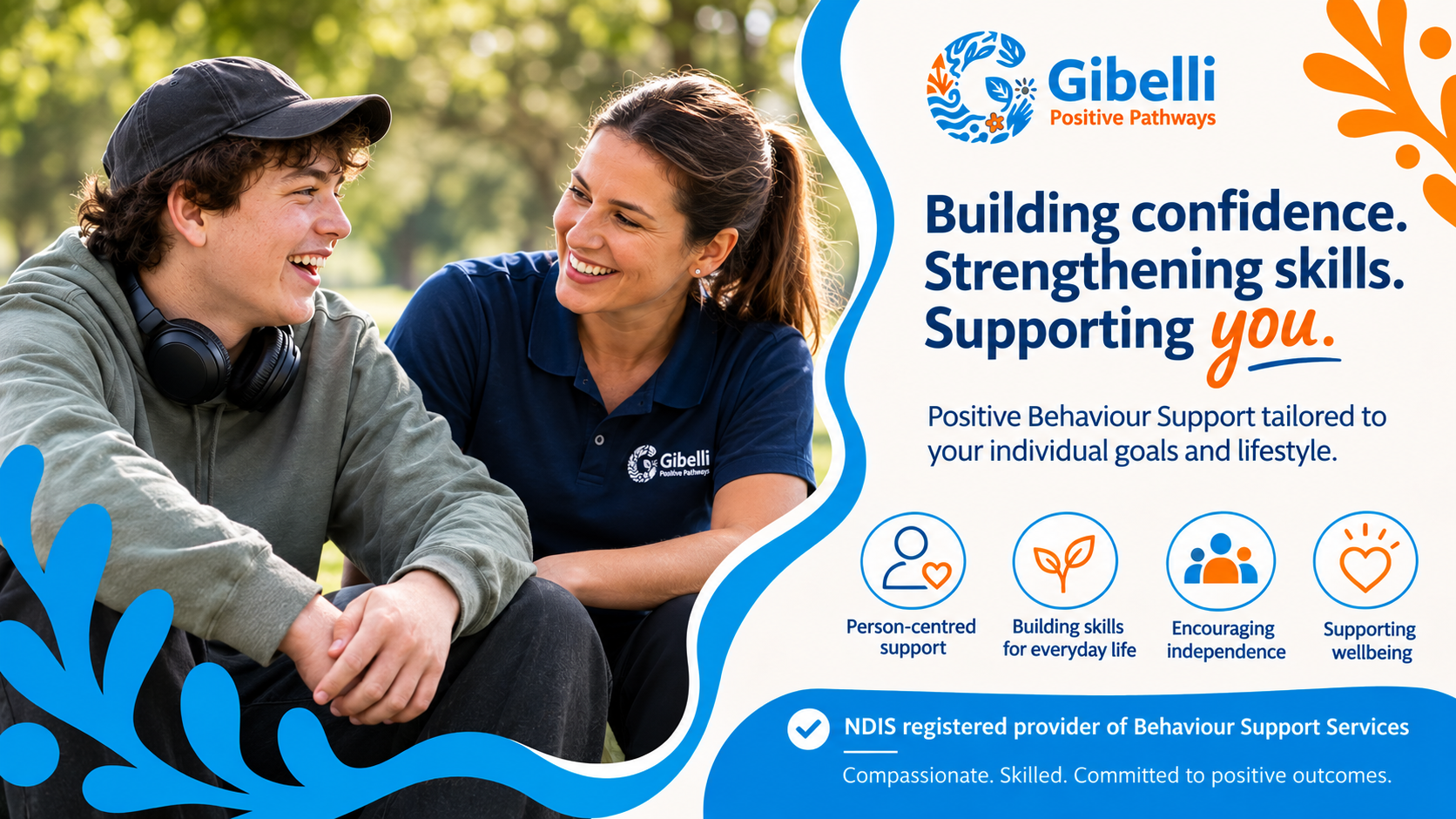
Discover why practitioner-led, neuro-affirming Positive Behaviour Support delivered in real-world environments like homes and schools creates lasting outcomes across Greater Melbourne and Ballarat.
The Value of Mobile Support in Real-World Settings
When a Behaviour Support Practitioner conducts a Functional Behaviour Assessment (FBA) or implements a Behaviour Support Plan (BSP), context is everything. Behaviours of concern rarely occur in isolation; they are deeply connected to environmental triggers, sensory overload, communication barriers, and daily routines.
By meeting participants directly in their home, school, workplace, or local community, our practitioners can observe and support in real time:
In the Home: Understanding family dynamics, sensory inputs, and home routines allows us to co-design strategies that actually fit the household.
At School or Day Programs: Collaborating directly with educators and support staff ensures that environmental adjustments and proactive strategies are applied consistently throughout the day.
In the Community: Supporting participants in public spaces builds practical autonomy, confidence, and social participation without artificial boundaries.
Key Takeaway: Real-environment observation leads to more accurate assessments, more practical strategies, and significantly better long-term outcomes for participants and their support networks.
Neuro-Affirming & Rights-Based: Care That Respects the Individual
A mobile approach works hand-in-hand with our neuro-affirming and human-rights-focused clinical philosophy. We do not aim to eliminate natural expressions of neurodivergence or force masking. Instead, our focus is on:
Identifying Root Causes: Uncovering unmet needs, sensory triggers, or communication frustration behind challenging behaviours.
Reducing Restrictive Practices: Working dedicatedly to replace restrictive measures with proactive, environmental adjustments and skill-building.
Fostering Autonomy: Ensuring the participant's voice and choices remain at the center of their support plan.
Active Capacity Across Greater Melbourne & Ballarat
Whether you are located in the Western suburbs, Northern corridors, Eastern suburbs, Bayside, Southern growth corridors, or regional centers like Ballarat, our mobile practitioners come directly to you.
We actively collaborate with Support Coordinators, Plan Managers, local allied health professionals, and families to provide responsive intake with minimal waiting times.
Services Available Across Victoria:
Positive Behaviour Support (Interim & Comprehensive BSPs, FBAs, and Restrictive Practice Panel submissions)
Stakeholder & Carer Training (Coaching support workers and families to implement strategies effectively)
Make a Referral in Under 2 Minutes
If you are a Support Coordinator seeking a reliable clinical partner or a family member looking for compassionate, community-based support, getting started is straightforward. Our clinical intake team reviews all requests promptly to ensure a smooth transition into care.
👉 Click here to complete our secure NDIS Referral Form
Have questions before referring? Contact our intake team at info@gibellipositivepathways.com.au or call us on 1300 090 468.
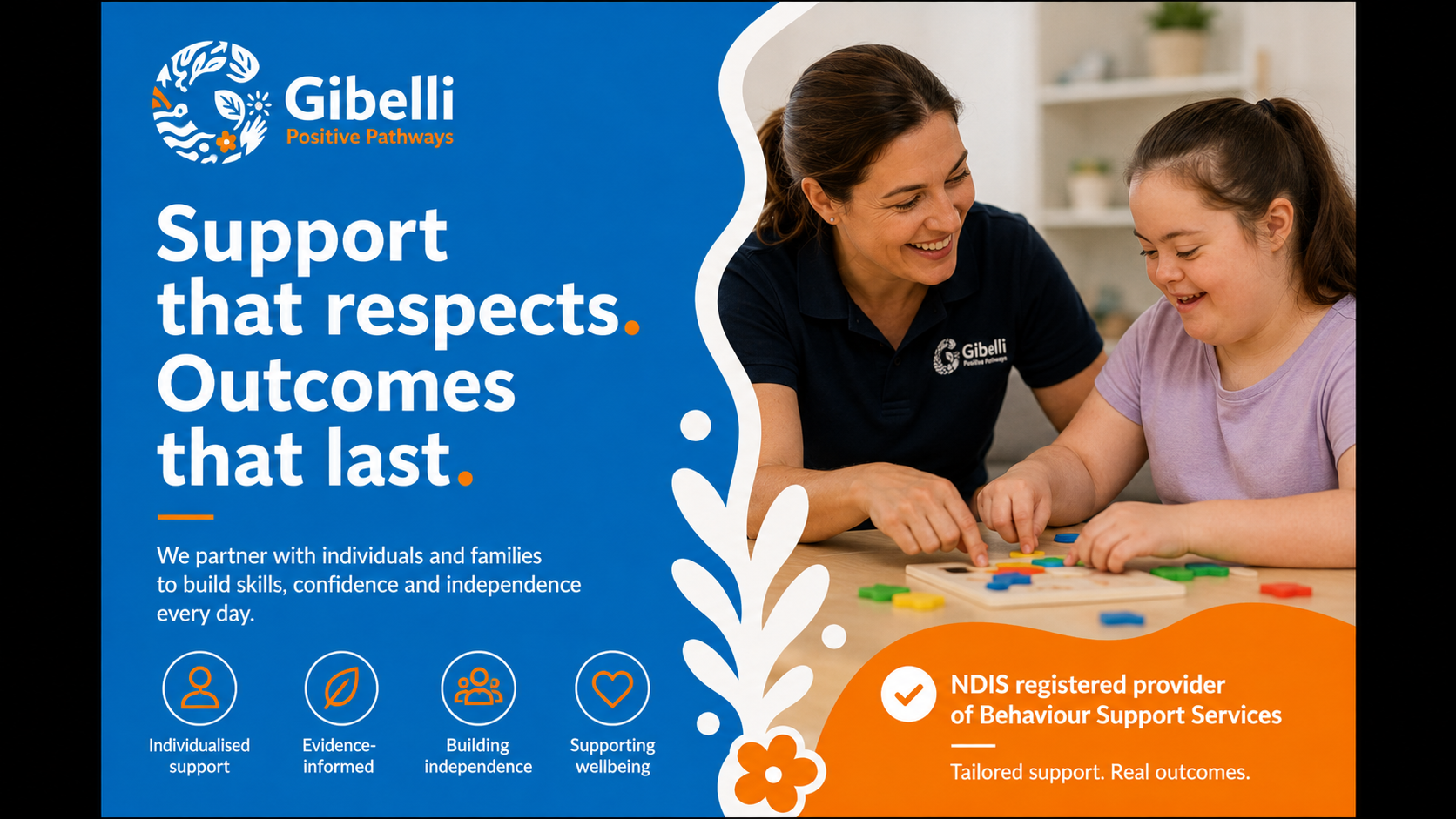
Discover why practitioner-led, neuro-affirming Positive Behaviour Support delivered in real-world environments like homes and schools creates lasting outcomes across Greater Melbourne and Ballarat.
Mobile NDIS Behaviour Support Across Greater Melbourne & Ballarat: Why Meeting Participants at Home & School Matters
Finding the right clinical support under the NDIS shouldn't depend on how far a participant can travel, nor should it force them into uncomfortable or unfamiliar environments.
For neurodivergent individuals and participants navigating complex behaviours of concern, traditional clinic-based therapy can sometimes introduce unnecessary stress. Busy waiting rooms, unfamiliar clinic lights, and strict artificial setups rarely reflect the realities of daily life.
At Gibelli Positive Pathways, we believe clinical care should adapt to the person—not the other way around. That’s why our Positive Behaviour Support (PBS) services are fully mobile, delivering practitioner-led, rights-based support across all Greater Melbourne suburbs and key regional hubs like Ballarat.
The Value of Mobile Support in Real-World Settings
When a Behaviour Support Practitioner conducts a Functional Behaviour Assessment (FBA) or implements a Behaviour Support Plan (BSP), context is everything. Behaviours of concern rarely occur in isolation; they are deeply connected to environmental triggers, sensory overload, communication barriers, and daily routines.
By meeting participants directly in their home, school, workplace, or local community, our practitioners can observe and support in real time:
In the Home: Understanding family dynamics, sensory inputs, and home routines allows us to co-design strategies that actually fit the household.
At School or Day Programs: Collaborating directly with educators and support staff ensures that environmental adjustments and proactive strategies are applied consistently throughout the day.
In the Community: Supporting participants in public spaces builds practical autonomy, confidence, and social participation without artificial boundaries.
Key Takeaway: Real-environment observation leads to more accurate assessments, more practical strategies, and significantly better long-term outcomes for participants and their support networks.
Neuro-Affirming & Rights-Based: Care That Respects the Individual
A mobile approach works hand-in-hand with our neuro-affirming and human-rights-focused clinical philosophy. We do not aim to eliminate natural expressions of neurodivergence or force masking. Instead, our focus is on:
Identifying Root Causes: Uncovering unmet needs, sensory triggers, or communication frustration behind challenging behaviours.
Reducing Restrictive Practices: Working dedicatedly to replace restrictive measures with proactive, environmental adjustments and skill-building.
Fostering Autonomy: Ensuring the participant's voice and choices remain at the center of their support plan.
Active Capacity Across Greater Melbourne & Ballarat
Whether you are located in the Western suburbs, Northern corridors, Eastern suburbs, Bayside, Southern growth corridors, or regional centers like Ballarat, our mobile practitioners come directly to you.
We actively collaborate with Support Coordinators, Plan Managers, local allied health professionals, and families to provide responsive intake with minimal waiting times.
Services Available Across Victoria:
Positive Behaviour Support (Interim & Comprehensive BSPs, FBAs, and Restrictive Practice Panel submissions)
Stakeholder & Carer Training (Coaching support workers and families to implement strategies effectively)
Make a Referral in Under 2 Minutes
If you are a Support Coordinator seeking a reliable clinical partner or a family member looking for compassionate, community-based support, getting started is straightforward. Our clinical intake team reviews all requests promptly to ensure a smooth transition into care.
👉 Click here to complete our secure NDIS Referral Form
Have questions before referring? Contact our intake team at info@gibellipositivepathways.com.au or call us on 1300 090 468.
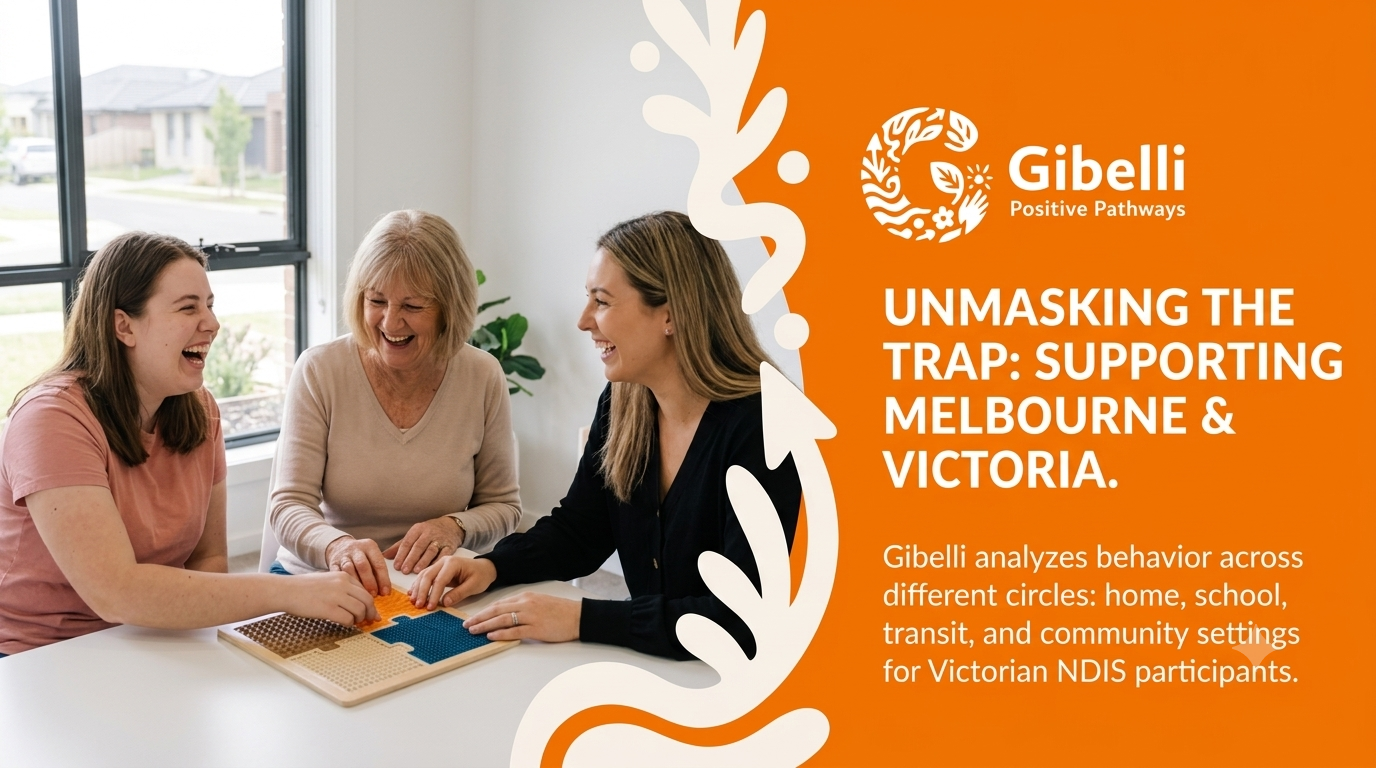
Discover why practitioner-led, neuro-affirming Positive Behaviour Support delivered in real-world environments like homes and schools creates lasting outcomes across Greater Melbourne and Ballarat.
Mobile NDIS Behaviour Support Across Greater Melbourne & Ballarat: Why Meeting Participants at Home & School Matters
Finding the right clinical support under the NDIS shouldn't depend on how far a participant can travel, nor should it force them into uncomfortable or unfamiliar environments.
For neurodivergent individuals and participants navigating complex behaviours of concern, traditional clinic-based therapy can sometimes introduce unnecessary stress. Busy waiting rooms, unfamiliar clinic lights, and strict artificial setups rarely reflect the realities of daily life.
At Gibelli Positive Pathways, we believe clinical care should adapt to the person—not the other way around. That’s why our Positive Behaviour Support (PBS) services are fully mobile, delivering practitioner-led, rights-based support across all Greater Melbourne suburbs and key regional hubs like Ballarat.
The Value of Mobile Support in Real-World Settings
When a Behaviour Support Practitioner conducts a Functional Behaviour Assessment (FBA) or implements a Behaviour Support Plan (BSP), context is everything. Behaviours of concern rarely occur in isolation; they are deeply connected to environmental triggers, sensory overload, communication barriers, and daily routines.
By meeting participants directly in their home, school, workplace, or local community, our practitioners can observe and support in real time:
In the Home: Understanding family dynamics, sensory inputs, and home routines allows us to co-design strategies that actually fit the household.
At School or Day Programs: Collaborating directly with educators and support staff ensures that environmental adjustments and proactive strategies are applied consistently throughout the day.
In the Community: Supporting participants in public spaces builds practical autonomy, confidence, and social participation without artificial boundaries.
Key Takeaway: Real-environment observation leads to more accurate assessments, more practical strategies, and significantly better long-term outcomes for participants and their support networks.
Neuro-Affirming & Rights-Based: Care That Respects the Individual
A mobile approach works hand-in-hand with our neuro-affirming and human-rights-focused clinical philosophy. We do not aim to eliminate natural expressions of neurodivergence or force masking. Instead, our focus is on:
Identifying Root Causes: Uncovering unmet needs, sensory triggers, or communication frustration behind challenging behaviours.
Reducing Restrictive Practices: Working dedicatedly to replace restrictive measures with proactive, environmental adjustments and skill-building.
Fostering Autonomy: Ensuring the participant's voice and choices remain at the center of their support plan.
Active Capacity Across Greater Melbourne & Ballarat
Whether you are located in the Western suburbs, Northern corridors, Eastern suburbs, Bayside, Southern growth corridors, or regional centers like Ballarat, our mobile practitioners come directly to you.
We actively collaborate with Support Coordinators, Plan Managers, local allied health professionals, and families to provide responsive intake with minimal waiting times.
Services Available Across Victoria:
Positive Behaviour Support (Interim & Comprehensive BSPs, FBAs, and Restrictive Practice Panel submissions)
Stakeholder & Carer Training (Coaching support workers and families to implement strategies effectively)
Make a Referral in Under 2 Minutes
If you are a Support Coordinator seeking a reliable clinical partner or a family member looking for compassionate, community-based support, getting started is straightforward. Our clinical intake team reviews all requests promptly to ensure a smooth transition into care.
👉 Click here to complete our secure NDIS Referral Form
Have questions before referring? Contact our intake team at info@gibellipositivepathways.com.au or call us on 1300 090 468.
Traditional clinic visits can bring unnecessary stress and sensory fatigue. Gibelli Positive Pathways delivers fully mobile, practitioner-led NDIS Behaviour Support and Counselling across all Greater Melbourne suburbs—meeting participants where they feel most comfortable at home, school, or in the community.
Mobile NDIS Behaviour Support Across Greater Melbourne: Why Meeting Participants at Home & School Matters
Looking for a mobile NDIS Behaviour Support Practitioner or Counsellor in Melbourne? Discover why practitioner-led, neuro-affirming support in everyday environments creates lasting outcomes—covering all Greater Melbourne suburbs.
Finding the right clinical support under the NDIS shouldn't depend on how far a participant can travel, nor should it force them into uncomfortable or unfamiliar environments.
For neurodivergent individuals and participants navigating complex behaviours of concern, traditional clinic-based therapy can sometimes introduce unnecessary stress. Busy waiting rooms, unfamiliar clinic lights, and strict artificial setups rarely reflect the realities of daily life.
At Gibelli Positive Pathways, we believe clinical care should adapt to the person—not the other way around. That’s why our Positive Behaviour Support (PBS) and specialized Counselling services are fully mobile, delivering practitioner-led, rights-based support across all Greater Melbourne suburbs.
The Value of Mobile Support in Real-World Settings
When a Behaviour Support Practitioner conducts a Functional Behaviour Assessment (FBA) or implements a Behaviour Support Plan (BSP), context is everything. Behaviours of concern rarely occur in isolation; they are deeply connected to environmental triggers, sensory overload, communication barriers, and daily routines.
By meeting participants directly in their home, school, workplace, or local community, our practitioners can observe and support in real time:
In the Home: Understanding family dynamics, sensory inputs, and home routines allows us to co-design strategies that actually fit the household.
At School or Day Programs: Collaborating directly with educators and support staff ensures that environmental adjustments and proactive strategies are applied consistently throughout the day.
In the Community: Supporting participants in public spaces builds practical autonomy, confidence, and social participation without artificial boundaries.
Key Takeaway: Real-environment observation leads to more accurate assessments, more practical strategies, and significantly better long-term outcomes for participants and their support networks.
Neuro-Affirming & Rights-Based: Care That Respects the Individual
A mobile approach works hand-in-hand with our neuro-affirming and human-rights-focused clinical philosophy. We do not aim to eliminate natural expressions of neurodivergence or force masking. Instead, our focus is on:
Identifying Root Causes: Uncovering unmet needs, sensory triggers, or communication frustration behind challenging behaviours.
Reducing Restrictive Practices: Working dedicatedly to replace restrictive measures with proactive, environmental adjustments and skill-building.
Fostering Autonomy: Ensuring the participant's voice and choices remain at the center of their support plan.
Active Capacity Across All Greater Melbourne Regions
Whether you are located in the Western suburbs, Northern corridors, Eastern suburbs, Bayside, or the Southern growth corridors, our mobile practitioners come directly to you.
We actively collaborate with Support Coordinators, Plan Managers, local allied health professionals, and families to provide responsive intake with minimal waiting times.
Services Available Across Melbourne:
Positive Behaviour Support (Interim & Comprehensive BSPs, FBAs, and Restrictive Practice Panel submissions)
Stakeholder & Carer Training (Coaching support workers and families to implement strategies effectively)
Make a Referral in Under 2 Minutes
If you are a Support Coordinator seeking a reliable clinical partner or a family member looking for compassionate, community-based support, getting started is straightforward. Our clinical intake team reviews all requests promptly to ensure a smooth transition into care.
👉 Click here to complete our secure NDIS Referral Form
Have questions before referring? Contact our intake team at info@gibellipositivepathways.com.au or call us on 1300 090 468.
Why compliance isn't always thriving. Discover how our mobile PBS practitioners uncover hidden sensory fatigue and masking across Melbourne and surrounding communities.
The Trap of "Good Behaviour": Why Masking Fails NDIS Participants in Victoria
It happens in almost every multidisciplinary team meeting. A Support Coordinator, a school teacher, a day program manager, and a family member sit around a table, trying to align their strategies for an NDIS participant. The problem? They feel like they are describing completely different people.
The day program reports that the participant is quiet, highly compliant, and completes tasks without issue. The school reports minor agitation during transitions but nothing disruptive. Meanwhile, the family is at breaking point at home, navigating intense, daily escalations, severe sensory meltdowns, and deep emotional distress.
In traditional Positive Behaviour Support (PBS), this mismatch often leads to the creation of a "blended profile"—a single, aggregated clinical document that averages out these behaviours into a one-size-fits-all summary. At Gibelli Positive Pathways, we view blended profiles as a significant risk to participant rights and clinical integrity. Human behaviour does not exist in a vacuum; it is entirely dependent on context, safety, and environment.
The Masking Trap and "Surprising" Escalations
When a practitioner reviews an aggregated profile without deep environmental analysis, they miss the invisible neurological fatigue building up throughout a participant’s day. A quiet, highly compliant presentation in a structured setting like a school or day program isn't always a sign of thriving—it is frequently a sign of high-stress "masking".
A neurodivergent participant may expend immense cognitive and sensory energy trying to blend into a restrictive or overwhelming public environment. When they finally return to their home in Melbourne’s Western Suburbs, that neurological fuel tank is completely empty. The home becomes the only place safe enough to release that accumulated stress, leading to meltdowns that feel "sudden" or "unprovoked" to an untrained eye. If the PBS plan treats the home escalations as an isolated behavioral issue without addressing the environmental exhaustion from earlier in the day, the strategies are guaranteed to fail.
Moving Beyond the Monolithic Plan
A rights-based, neuro-affirming clinical model rejects the idea of a monolithic profile. Instead, an expert practitioner must map out the participant's distinct environmental ecosystems separately:
The Structured Public Space: Identifying hidden sensory triggers, communication demands, and the cost of compliance in schools or workplaces.
The Transit Corridors: Recognizing how the stress of commuting between different community spaces and home hubs drains emotional regulation before a participant even arrives.
The Safe Haven (Home): Building a care circle that understands home escalations are not behavioral defiance, but a neurological decompression requiring coregulation, safety, and deep connection.
Why Caseload Caps Change the Clinical Outcome
Uncovering these distinct environmental profiles requires extensive time in the room. A practitioner cannot see the difference between masking and genuine comfort if they are rushing through a standard 45-minute checklist or juggling forty active cases.
Because our clinicians operate under strict caseload caps, they have the professional autonomy to step past the surface-level documentation. We spend dedicated, unhurried time observing how a participant moves through their specific spaces—whether that is a home in Werribee, a school in Melton, or a community setting across the metropolitan area. This depth of focus allows us to coach the care circle on how to reduce neurological fatigue long before it crosses the threshold into an escalation.
Connect with a Responsive PBS Team in Victoria
Are you a Victorian Support Coordinator looking for a practitioner-led team that values clinical depth over caseload volume? Or a family seeking a mobile provider who truly understands how environment shapes behaviour? Our streamlined intake pipeline connects referrals directly with active practitioners across Melbourne without dead-end waitlists.
Too many NDIS Positive Behaviour Support plans end up sitting on a shelf. Truly effective care requires moving past the paperwork and into the room. Discover what active, hands-on upskilling looks like for Victorian families and care circles.
Beyond the PDF: What Hands-On NDIS Behaviour Support Upskilling Actually Looks Like in Victoria
It is an all-too-common frustration within the NDIS landscape: a Positive Behaviour Support (PBS) practitioner spends weeks conducting assessments, compiles a massive, 50-page clinical document, hands it over, and then disappears.
The family is left with a complex PDF filled with clinical jargon. The support workers are left trying to interpret academic strategies during a high-stress moment. The plan sits on a shelf, and the everyday reality for the participant doesn't change.
At Gibelli Positive Pathways, we believe a behaviour support plan is only as good as its real-world implementation. Clinical excellence cannot stop at the keyboard. For a plan to truly safeguard a participant’s rights and improve their quality of life, a practitioner must step past the paperwork and move into the room.
Here is what active, hands-on upskilling actually looks like under our model.
Moving From Theory to Live Co-Regulation
Writing down a reactive strategy is easy; coaching a care circle through a highly escalating situation in real time is where real progress happens. We don't expect families or support networks to become overnight clinical experts by reading a document.
Instead, our practitioners work side-by-side with your participant's care circle to transform theory into instinct:
Modeling in the Environment: We don't just explain how to implement environmental modifications or sensory adjustments—we physically show up at home, at school, or in the community to help set them up.
Active Co-Regulation Coaching: When a participant experiences sensory overload or distress, we coach support staff and family members on how to co-regulate rather than manage. This means focusing on safety, reducing neurological fatigue, and de-escalating through connection, not compliance.
Translating the Clinical into the Practical: We break down complex behavioral data into clear, actionable, daily rhythms that shift workers and family members can easily understand and repeat consistently.
Why Sustainable Capacity Dictates Results
Hands-on upskilling takes time, energy, and deep focus. A practitioner cannot deliver this level of dedicated care if they are exhausted by a massive caseload or drowning in travel times.
Because we strictly cap our active clinician files and strategically coordinate our mobile outreach across Melbourne Metro, the Mornington Peninsula, and Geelong, our team has the physical and mental availability to show up fully. We stay in the environment long enough to ensure the support network feels confident, capable, and supported.
When an entire care circle is upskilled correctly, the reliance on restrictive practices naturally drops, trust grows within the home, and the participant experiences a true, rights-based environment where they can thrive.
Partner With an Active, Direct Support Team in Victoria
If you are a Victorian Support Coordinator tired of chasing providers who only deliver paperwork, or a family member seeking a stable, high-integrity provider who will work alongside you, our intake pipeline is open.
By actively monitoring our team’s regional availability, we bypass dead-end triage loops and indefinite waitlists. When we accept a referral, it is for immediate, direct practitioner assignment.
Ready to experience a streamlined, responsive intake process? Click below to initiate a direct clinical match through our secure portal.

When looking for Positive Behaviour Support (PBS) within the Victorian NDIS landscape, the phrase "neuro-affirming" comes up frequently. Truly neuro-affirming care turns the traditional framework upside down: instead of asking how to change the person, we ask how the environment must change to support them.
Beyond Compliance: What Truly Neuro-Affirming Behaviour Support Looks Like in Victoria
When looking for Positive Behaviour Support (PBS) within the Victorian NDIS landscape, the phrase "neuro-affirming" comes up frequently. But what does it actually mean in practice?
For a long time, traditional behavior support focused heavily on compliance—asking how to change, suppress, or modify a participant's behavior so they fit more quietly into the world around them.
At Gibelli Positive Pathways, we reject that old-school framework. Truly neuro-affirming care turns the question upside down. Instead of asking how to change the person, we ask: How must the environment change to support the person?
Flipping the Focus to the Environment
Behavior is communication. When an NDIS participant experiences distress, it is rarely an isolated "behavior issue." It is almost always a mismatch between a person's unique neurology and an environment that isn't built for them.
Our practitioner-led model focuses heavily on identifying and dismantling these external friction points through concrete, real-world adjustments:
Targeting Sensory Barriers: We deeply analyze the sensory landscape of the home, school, or community space. Minimizing overwhelming auditory, visual, or tactile triggers drastically reduces the neurological fatigue that leads to burnout and crisis.
Environmental Modifications: Rather than forcing a participant to adapt to a rigid routine, we help families and support networks restructure physical spaces and daily flows to maximize autonomy and predictability.
Hands-On Upskilling: We don't just write a plan and leave it on a shelf. We work side-by-side with care circles, teaching support teams how to co-regulate rather than manage, ensuring rights-based care becomes the daily standard.
Built for Autonomy, Not Control
Neuro-affirming PBS is rooted in a fundamental respect for human rights. It means acknowledging that a participant's neurodivergence is an inherent part of who they are, not a deficit to be cured.
When a practitioner operates from this headspace, the therapeutic relationship changes entirely. Trust replaces friction. Progress is measured by a participant's comfort, communication, and quality of life—not by how well they follow orders.
Because we explicitly cap our active clinician files and structure our mobile outreach across Melbourne Metro, the Mornington Peninsula, and Geelong, our Victorian team actually has the dedicated mental capacity to do this deep, individualized work. We don't rush our assessments, and we don't rely on cookie-cutter strategies.
Secure Consistent, High-Integrity Care in Victoria
If you are a Victorian Support Coordinator looking to protect your participant’s momentum with a provider that respects their identity, or a family seeking a stable, affirming clinical match, our intake pipeline is open.
By actively balancing our team's capacity, we bypass the traditional triage loops and indefinite waitlists. When we accept a referral, we move directly to direct practitioner assignment.
Ready to experience a streamlined, responsive intake process? Click below to initiate a direct clinical match through our secure portal.
Sourcing Specialist Positive Behaviour Support in Victoria shouldn't mean facing six-month waitlists. Discover how Gibelli Positive Pathways combines immediate capacity with high clinical integrity through our 100% mobile-first model across Melbourne and Bendigo.
Beyond the Waitlist: Why "Immediate Capacity" Must Meet High Clinical Integrity in Victorian PBS
For NDIS Support Coordinators across Victoria, the daily reality of sourcing Specialist Positive Behaviour Support (PBS) has become an exercise in managing triage lists. You secure behavior support funding for a participant, only to face a familiar, exhausting hurdle: six-month waitlists, unresponsive intake lines, or national providers offering "immediate availability" that vanishes the moment you ask for a practitioner to visit a school in outer Melbourne or a home in Bendigo.
In the current NDIS landscape, "immediate capacity" is easy to promise online but incredibly difficult to deliver with genuine clinical integrity in the field.
At Gibelli Positive Pathways, we look at capacity differently. To us, open availability isn’t just a marketing headline—it is a conscious structural choice designed to relieve pressure on Victorian Support Coordinators and deliver immediate, neuro-affirming care when a participant needs it most.
The Reactive Trap: The Cost of NDIS Waitlists
When a participant with complex environmental stressors is left sitting on a waitlist, their situation rarely stays stable. Without proactive, environmental modifications and early intervention, behaviors of concern can intensify.
This delay triggers a costly domino effect:
Family Burnout: Parents and primary caregivers step into high-stress crisis management without professional backing.
Placement Breakdown: School enrollments, supported independent living (SIL) arrangements, and community participations are placed at immediate risk.
Administrative Friction: Support Coordinators spend hours chasing unreturned emails or re-keying referrals into endless agency portals.
When support is delayed, practitioners are ultimately forced into a reactive position—treating a crisis that has already boiled over rather than proactively engineering a safer, more supportive environment from the start.
Open Capacity, Managed Responsibly
If long waitlists are the industry norm, how does Gibelli Victoria maintain immediate capacity without compromising on quality?
The answer lies in how we manage our practitioners' caseloads and travel corridors. We reject the high-volume, high-burnout agency model. Instead, we intentionally cap our practitioners' active caseloads.
This deliberate structure yields distinct advantages for Victorian families:
1. Dedicated Travel Time is Baked In
Because our model is 100% mobile, our practitioners' schedules are built around localized travel corridors. Whether moving through Melbourne’s northern growth hubs or traveling across regional communities surrounding Bendigo, our team has dedicated transit time built into their week. Immediate capacity means nothing if a practitioner is too overbooked to drive out to a participant's natural environment.
2. Rapid Functional Assessments (FBAs)
When a referral is accepted through our portal, the momentum doesn't stall. Our practitioners can initiate the direct observation phase immediately. We observe the real-world morning routines, classroom dynamics, and sensory triggers in real time, translating raw observations into an accurate, compliant Functional Behaviour Assessment without months of administrative lag.
3. Sustainability Breeds Quality
A burnt-out practitioner cannot deliver neuro-affirming, deeply considered care. By protecting our clinicians’ caseload numbers, we ensure they arrive at every home, school, and community space with the mental clarity, empathy, and focus required to upskill support networks effectively.
Our Clinical Focus: We don't focus on modifying the individual to fit an overwhelming world. We focus on modifying the environment, removing barriers, and giving the core support network the practical tools they need to succeed in situ.
How to Make a Referral
We have deliberately streamlined our intake process to eliminate the typical administrative friction. You won’t have to chase us for updates or wait weeks just to hear if a file has been assigned.
Submit via the Online Portal (Takes less than 5 minutes) Click through to our secure Online Referral Portal (or click the Make a Referral button in our main menu). Upload the participant’s NDIS plan details, goals, and any existing assessments so our team has the full clinical context from day one.
Clinical Intake Review (Within 24–48 hours) Our Victorian intake team reviews the file to ensure the funding matches the service requirements and aligns perfectly with our active travel corridors in Melbourne or Bendigo.
Practitioner Matching (Immediate assignment) Because we maintain active, unbooked capacity, we immediately assign an experienced clinician who specializes in the participant’s unique environmental and neuro-affirming needs.
Initial Consultation Booked (Commencing support) The assigned practitioner reaches out directly to the family and Support Coordinator to schedule the first face-to-face mobile visit at home, school, or in the community.
Active Service Corridors Across Victoria
We are actively accepting referrals with zero waitlists across our established Victorian service pathways:
All Metro Melbourne Suburbs: Comprehensive metropolitan outreach spanning from the Mornington Peninsula right through to the Northern and Western corridors.
Regional Victoria: Localized mobile capacity servicing the Greater Bendigo region and its surrounding regional hubs.
Partner with Gibelli Victoria
If you are a Support Coordinator managing a critical budget or a family navigating an escalating situation, you don’t have six months to wait for a clinic callback. You need a responsive, highly mobile partner who can hit the ground running this week.
Fast-Track Referrals: Avoid administrative delays by submitting details directly through our secure Online Referral Portal.
Direct Clinical Intake: To discuss localized corridor coverage or a participant's specific environmental support needs, reach out directly to our intake team at info@gibellipositivepathways.com.au or call 1300 090 468.