
NDIS Positive Behaviour Support Insights | Gibelli Positive Pathways
Providing mobile PBS and Functional Behaviour Assessments to families across Victoria, New South Wales, South Australia, and Western Australia. While we support participants across multiple states, we are currently offering priority mobile capacity in Melbourne’s Western suburbs, including Melton, Werribee, and the Wyndham corridor.
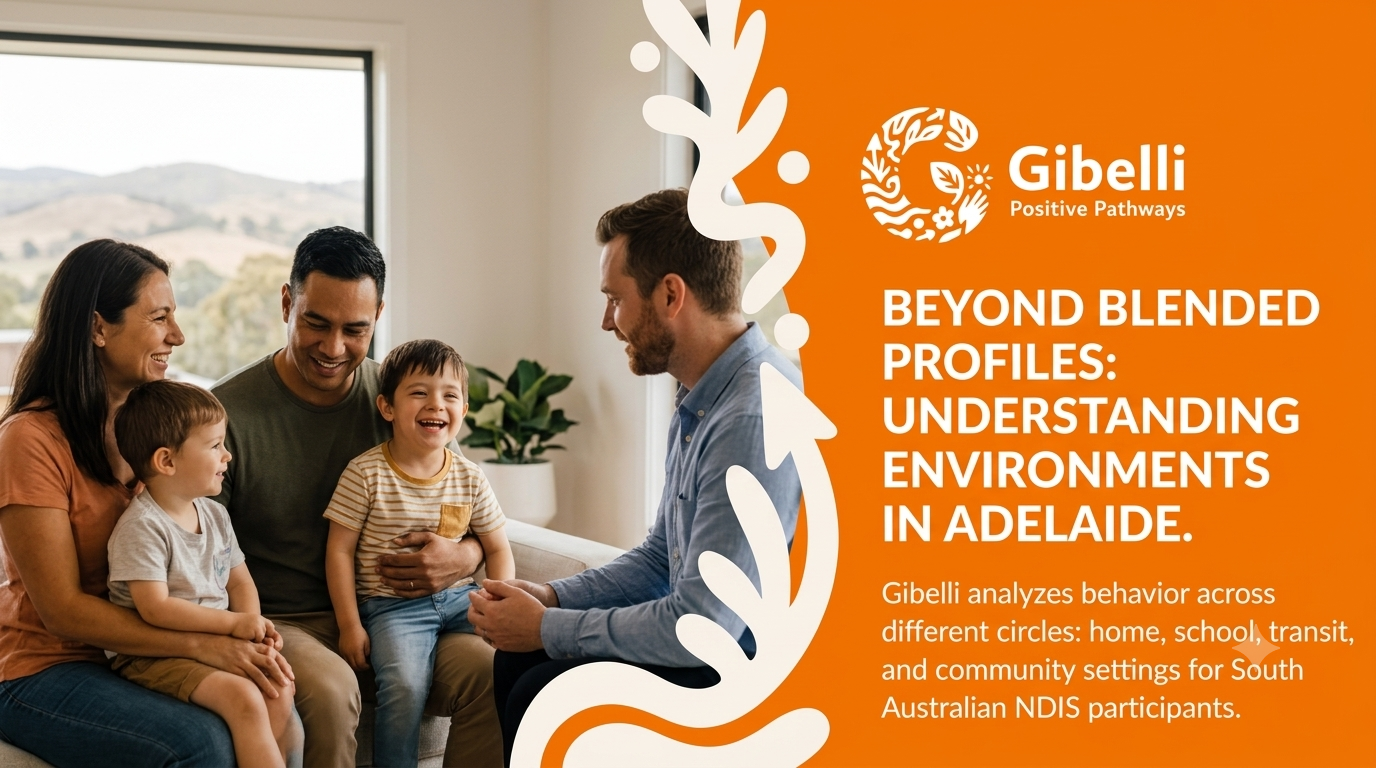
Why one-size-fits-all participant profiles fail. Discover how neuro-affirming mobile PBS practitioners analyze environmental behavior across Adelaide circles.
The Danger of "Blended Profiles": Why Environmental Context Changes Everything in NDIS Behaviour Support
It happens in almost every multidisciplinary team meeting. A Support Coordinator, a school teacher, a day program manager, and a family member sit around a table, trying to align their strategies for an NDIS participant. The problem? They feel like they are describing completely different people.
The day program reports that the participant is quiet, highly compliant, and completes tasks without issue. The school reports minor agitation during transitions but nothing disruptive. Meanwhile, the family is at breaking point at home, navigating intense, daily escalations, severe sensory meltdowns, and deep emotional distress.
In traditional Positive Behaviour Support (PBS), this mismatch often leads to the creation of a "blended profile"—a single, aggregated clinical document that averages out these behaviours into a one-size-fits-all summary. At Gibelli Positive Pathways, we view blended profiles as a significant risk to participant rights and clinical integrity. Human behaviour does not exist in a vacuum; it is entirely dependent on context, safety, and environment.
The Masking Trap and "Surprising" Escalations
When a practitioner reviews an aggregated profile without deep environmental analysis, they miss the invisible neurological fatigue building up throughout a participant’s day. A quiet, highly compliant presentation in a structured setting like a school or day program isn't always a sign of thriving—it is frequently a sign of high-stress "masking."
A neurodivergent participant may expend immense cognitive and sensory energy trying to blend into a restrictive or overwhelming public environment. When they finally return to their home in the Adelaide Metro or Northern Suburbs, that neurological fuel tank is completely empty. The home becomes the only place safe enough to release that accumulated stress, leading to meltdowns that feel "sudden" or "unprovoked" to an untrained eye. If the PBS plan treats the home escalations as an isolated behavioral issue without addressing the environmental exhaustion from earlier in the day, the strategies are guaranteed to fail.
Moving Beyond the Monolithic Plan
A rights-based, neuro-affirming clinical model rejects the idea of a monolithic profile. Instead, an expert practitioner must map out the participant's distinct environmental ecosystems separately:
The Structured Public Space: Identifying hidden sensory triggers, communication demands, and the cost of compliance in schools or workplaces.
The Transit Corridors: Recognizing how the stress of commuting between the Adelaide Hills and regional hubs drains emotional regulation before a participant even arrives.
The Safe Haven (Home): Building a care circle that understands home escalations are not behavioral defiance, but a neurological decompression requiring coregulation, safety, and deep connection.
Why Caseload Caps Change the Clinical Outcome
Uncovering these distinct environmental profiles requires extensive time in the room. A practitioner cannot see the difference between masking and genuine comfort if they are rushing through a standard 45-minute checklist or juggling forty active cases.
Because our clinicians operate under strict caseload caps, they have the professional autonomy to step past the surface-level documentation. We spend dedicated, unhurried time observing how a participant moves through their specific spaces—whether that is a home in the Adelaide Hills or a community center in the Northern Suburbs. This depth of focus allows us to coach the care circle on how to reduce neurological fatigue long before it crosses the threshold into an escalation.
Connect with a Responsive PBS Team in South Australia
Are you a South Australian Support Coordinator looking for a practitioner-led team that values clinical depth over caseload volume? Or a family seeking a mobile provider who truly understands how environment shapes behaviour? Our streamlined intake pipeline connects referrals directly with active practitioners without dead-end waitlists.
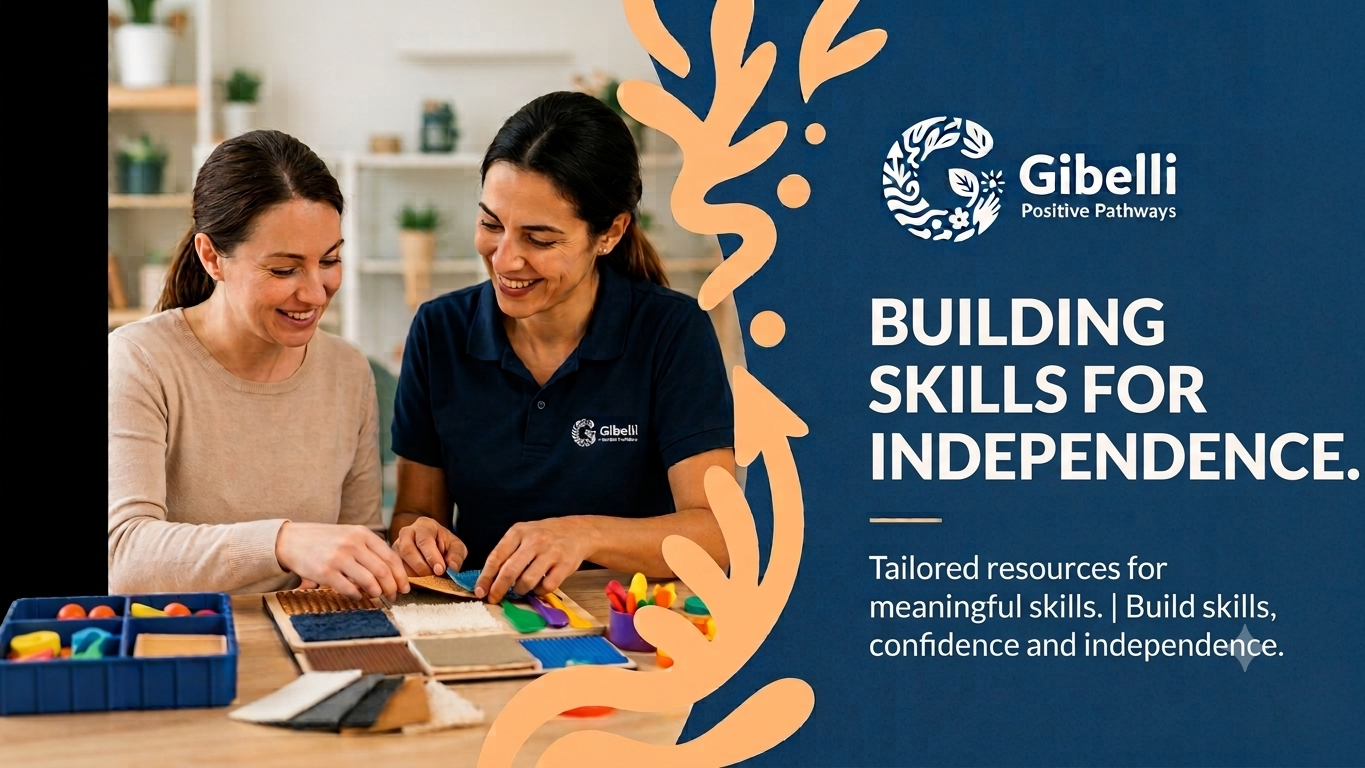
When looking for Positive Behaviour Support (PBS) within the South Australian NDIS landscape, the phrase "neuro-affirming" comes up frequently. But what does it actually mean in practice? Truly neuro-affirming care turns the traditional framework upside down: instead of asking how to change the person, we ask how the environment must change to support them.
Beyond Compliance: What Truly Neuro-Affirming Behaviour Support Looks Like
When looking for Positive Behaviour Support (PBS) within the South Australian NDIS landscape, the phrase "neuro-affirming" comes up frequently. But what does it actually mean in practice?
For a long time, traditional behavior support focused heavily on compliance—asking how to change, suppress, or modify a participant's behavior so they fit more quietly into the world around them.
At Gibelli Positive Pathways, we reject that old-school framework. Truly neuro-affirming care turns the question upside down. Instead of asking how to change the person, we ask: How must the environment change to support the person?
Flipping the Focus to the Environment
Behavior is communication. When an NDIS participant experiences distress, it is rarely an isolated "behavior issue." It is almost always a mismatch between a person's unique neurology and an environment that isn't built for them.
Our practitioner-led model focuses heavily on identifying and dismantling these external friction points through concrete, real-world adjustments:
Targeting Sensory Barriers: We deeply analyze the sensory landscape of the home, school, or community space. Minimizing overwhelming auditory, visual, or tactile triggers drastically reduces the neurological fatigue that leads to burnout and crisis.
Environmental Modifications: Rather than forcing a participant to adapt to a rigid routine, we help families and support networks restructure physical spaces and daily flows to maximize autonomy and predictability.
Hands-On Upskilling: We don't just write a plan and leave it on a shelf. We work side-by-side with care circles, teaching support teams how to co-regulate rather than manage, ensuring rights-based care becomes the daily standard.
Built for Autonomy, Not Control
Neuro-affirming PBS is rooted in a fundamental respect for human rights. It means acknowledging that a participant's neurodivergence is an inherent part of who they are, not a deficit to be cured.
When a practitioner operates from this headspace, the therapeutic relationship changes entirely. Trust replaces friction. Progress is measured by a participant's comfort, communication, and quality of life—not by how well they follow orders.
Because we explicitly cap our active clinician files and structure our mobile outreach across the Adelaide Metro, the Northern Suburbs, and the Adelaide Hills, our South Australian team actually has the dedicated mental capacity to do this deep, individualized work. We don't rush our assessments, and we don't rely on cookie-cutter strategies.
Secure Consistent, High-Integrity Care in South Australia
If you are a South Australian Support Coordinator looking to protect your participant’s momentum with a provider that respects their identity, or a family seeking a stable, affirming clinical match, our intake pipeline is open.
By actively balancing our team's capacity, we bypass the traditional triage loops and indefinite waitlists. When we accept a referral, we move directly to direct practitioner assignment.
Ready to experience a streamlined, responsive intake process? Click below to initiate a direct clinical match through our secure portal.